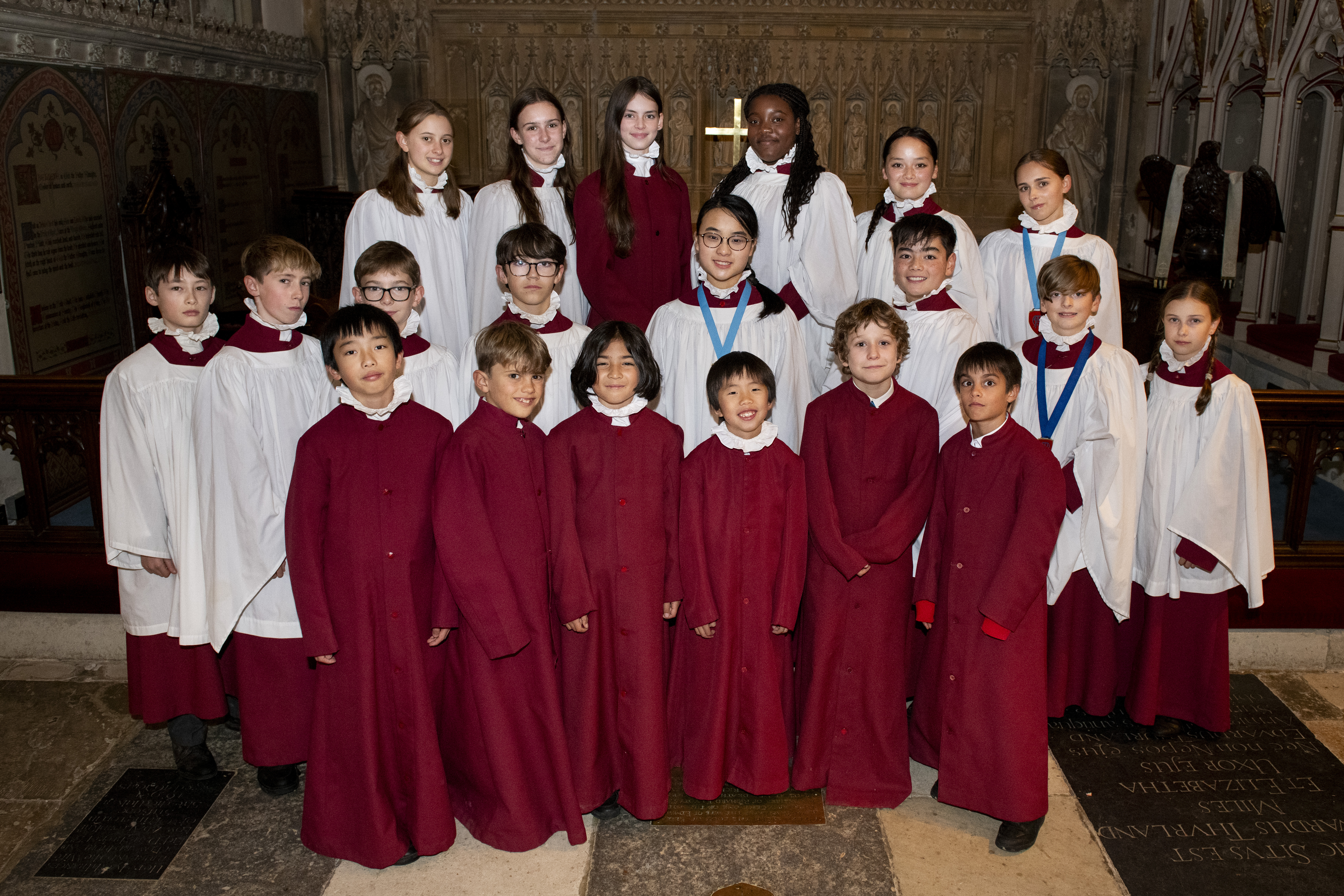

At Reigate St Mary’s, performing arts are not confined to stages, costumes or end‑of‑term productions. Our choristers programme represents a truly dynamic performing arts pathway, combining elite musical training with emotional development, leadership, confidence‑building and meaningful community engagement.
The Head of Choral Music, Tali Glynne-Jones, has shared fresh insight into the Choristers Programme, highlighting the unique opportunities it offers and the lasting outcomes for young singers.
As one of only around 40 schools nationally belonging to the Cathedral Schools Association, alongside institutions such as St Paul’s Cathedral, Westminster Abbey and New College Oxford, Reigate St Mary’s occupies a rare and distinctive position in choral education. However, the programme’s strength lies not in tradition for tradition’s sake — but in how that tradition has been reimagined for today’s child.
My approach when I came in was that being a chorister must be a big part of their school experience — but it mustn’t completely take over.
Leadership & Vision: Excellence without Exclusion
The choristers programme is led with a clear, modern ethos: high standards, genuine opportunity and child‑centred flexibility. While the commitment is significant, pupils are supported to balance their choral role with the richness of wider school life.
This leadership model:
- Maintains discipline without rigidity
- Encourages autonomy and responsibility
- Allows pupils to thrive musically without sacrificing wellbeing or choice
The introduction of girls into the choristers further reflects this forward‑thinking approach, broadening access while strengthening the choir both musically and culturally.
We need to make this part of their school experience — but not the only thing they do.
Rigour, Skill & Measurable Excellence
Choristers rehearse and perform at a level rarely seen in prep‑school settings. They sing daily (with the exception of one day per week), take part in multiple services, including evensong and occasional Sunday services, and work through a constantly evolving repertoire.
The impact is tangible:
- All choristers receive individual singing tuition
- They regularly sit ABRSM examinations
- Many achieve distinctions, reflecting accelerated progress
They fly in their exams — because they do it all the time.
This immersion builds outstanding vocal technique, sight‑reading ability and musical agility, enabling pupils to pick up complex material quickly and confidently.
Leadership, Progression & Mentorship
The programme embeds a clear progression pathway:
- Chorister → Senior Chorister → Head Chorister
Older pupils mentor and support younger members, fostering a powerful culture of care, responsibility and mutual respect. Choristers from different year groups — and even partner senior schools — perform side by side, creating a rare cross‑age mentorship model.
The role modelling that goes on is something I’m not sure they get anywhere else.
Leadership also happens in practical ways: pupils manage robes, medals and music folders, understand complex service structures, and demonstrate professional‑level organisation and accountability.
Inclusion, Wellbeing & Emotional Impact
One of the most compelling aspects of the programme is its profound social and emotional impact. The choir offers a space where pupils — particularly those with neurodiverse profiles or social challenges — feel safe, valued and equal.
Everything else melts away. In the choir, they’re there because they’re good at singing — just like everyone else.
Within the choir:
- Difference is replaced by belonging
- Talent becomes identity
- Familiarity and shared purpose build confidence and calm
This aligns with wider research discussed within the Cathedral Schools Association, underscoring that choral programmes can deliver exceptional emotional and wellbeing outcomes.
The social and emotional learning from being a chorister is underestimated.
Confidence Through Performance (Not Showiness)
Choristers develop authentic confidence — not through ego, but through deep immersion in performance. Singing becomes routine; audiences become incidental.
They’re not intimidated by people listening — because they do it all the time.
Children regularly:
- Perform solo in full churches (300–400 people)
- Walk alone up the aisle to sing
- Perform in formal, unfamiliar environments
This builds real‑world performance resilience — the kind that translates into drama, presentations, leadership and life beyond school.
Opportunities, Recognition & National Impact
The choristers programme opens doors that few schools can offer:
- A former chorister won BBC Young Chorister of the Year (2024/25)
- This led to:
- BBC Radio appearances
- Workshops led by acclaimed composer Bob Chilcott
- Increased national exposure for the choir
Choristers have also:
- Sung at St Paul’s Cathedral
- Travelled to sing at Salisbury Cathedral
- Performed in prestigious civic and community events
It wasn’t just her success — it opened opportunities for all of them.
Pathways into the Performing Arts
Many choristers naturally progress into wider performing arts experiences:
- A former chorister appeared as Bruce in Matilda (West End) for a year
- Others have moved into film, television and musical theatre
- Choristers consistently feature in school drama and productions
A lot of them go off and have little sneaky forays into the world of performing.
These are not isolated incidents, but evidence of a culture that nurtures confidence, professionalism and artistic courage.
Outreach, Community & Purpose
The choir is outward‑facing and community‑minded:
- Singing for elderly residents, followed by tea and conversation
- Community concerts and school events
- Performances that bring joy beyond the school gates
It’s about bringing joy to people who can’t get out and about.
This reinforces the belief that performing arts are not just about excellence — but about connection, generosity and joy.
Why This Is Dynamic Performing Arts
The choristers programme at Reigate St Mary’s is dynamic because it:
- Combines elite training with emotional intelligence
- Develops leadership, resilience and empathy
- Creates performers who are confident, grounded and authentic
- Offers experiences that transform lives, not just timetables
For us, this is next‑level — it’s an edge that other schools can’t talk about.
This is not a traditional choir. It is a living, evolving, high‑impact performing arts ecosystem - one that shapes confident performers, compassionate leaders and resilient young people, while delivering excellence on local, national and international stages.