
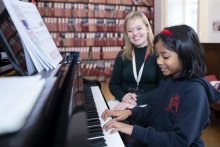
At Reigate St Mary’s, music is for every child. From Green Shoots to Year 6, our specialist‑led curriculum builds secure musicianship, nurtures confidence and joy, and offers a breadth of experiences - from choirs and orchestras to composition with music technology - that help pupils discover their voice and shine.
Specialist Teaching, Tailored to Every Child
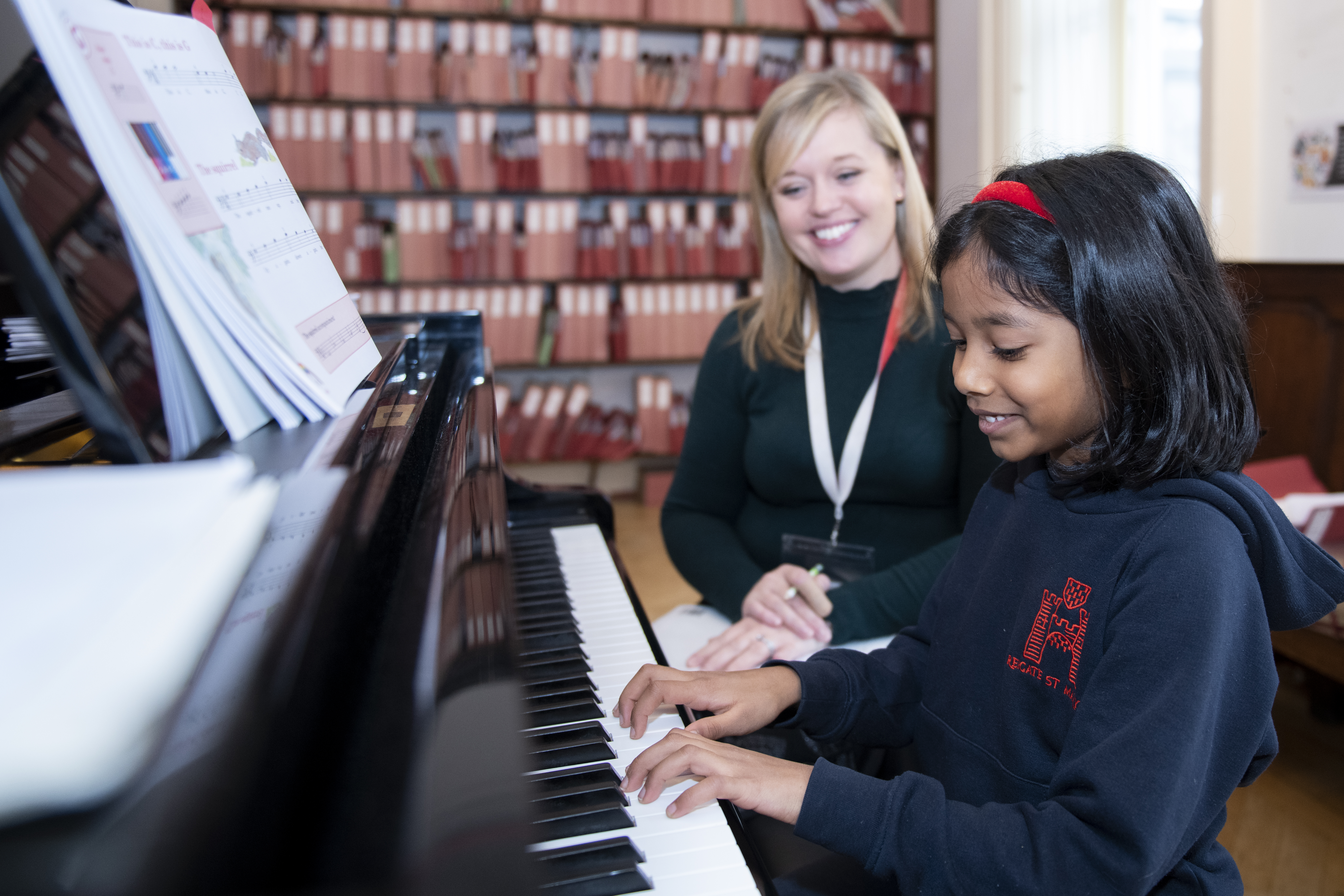
Our music is taught by specialists who know how to stretch and support children at just the right moment. Because the same teacher sees pupils from Reception through to Year 6, learning is highly personalised. Core skills come first: pulse, rhythm, pitch, Curwen sol‑fa hand signs, and lots of singing. This foundation ensures all children progress, whether or not they learn an instrument.
For many pupils who also take peripatetic lessons and sit ABRSM exams, those grade levels provide a helpful benchmark for in‑class extension - from adapting repertoire to introducing concepts like triads through accessible pieces. As our Head of Music, Mrs Whitehead, puts it:
Because we have ABRSM, I know exactly what a Grade 3 pianist can do - and I can tailor the curriculum to them.
Above all, lessons are fun and game‑based - with call‑and‑response, singing games and playful resources - removing barriers for pupils with SEND and those who don’t thrive in desk‑based tasks.
A Broad, Modern Programme
Our provision blends classroom music, choirs for all, ensembles, festivals, and music technology:
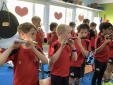
- Whole‑class instruments (KS2):
Year 3 recorders, Year 4 keyboards, Year 5 toots, Year 6 ukuleles. - Vocal pathways:
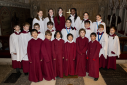
Weekly Lower School song practice, Year 2 Big Sing (a curricular “choir for all”), and open‑access choirs for Years 3–4 and 5–6 (run in form time to maximise inclusion). - Ensembles:
Orchestra, Guitar Ensemble, Percussion Ensemble (led by a Rockschool syllabus author), and Lower School Band — many directed by working professionals, from West End deputies to international touring musicians. - Performance calendar:
Christmas concerts, church performances, and the Surrey Arts Primary Music Festival at Dorking Halls, where pupils perform with a live band under the guidance of expert choral leaders. We also run informal concerts and a hugely popular Inter‑House Music.
We turned Y2 choir into ‘Big Sing’ so everyone could do it - it’s choir, but for all.
Music Technology & STEAM
Alongside traditional musicianship, children explore digital music‑making:
- Year 1 Music Tech term introduces Chrome Music Lab for playful composition and sound manipulation.
- KS2 use Groove Pizza (rhythm design), simple notation software and code‑sharing to perform each other’s glockenspiel pieces.
- Year 6 work with GarageBand (loops, sequencing, recording), exploring timbres - including Chinese instruments - and arranging their own tracks.
- The aim is to include one STEAM‑infused lesson per unit in Key Stage 2, linking creativity with technology.
By Year 6, many pupils see music tech as a normal part of music‑making:
By Year 6, they’re sequencing, looping and recording - music tech is a normal part of music‑making.
What Pupils Experience and Learn
Children sing, perform, compose, collaborate and lead - with and without instruments. They take part in concerts and church services, contribute to large‑scale events like Dorking Halls, and many step up for informal solos and duets. Ensembles foster discipline and teamwork, with section leads and peer modelling, and in curriculum lessons you might find a pupil acting as a “master drummer” in a West African unit.
Choirs are audition‑free and repertoire is carefully chosen for the voices in the room - a benefit of having a specialist who knows pupils so well. Inter‑House Music ensures every child contributes, whether as a soloist, ensemble player or through an inclusive music quiz that blends pop culture with classical literacy.
We seat children with strong singers so pitch becomes social and sonic - they learn by hearing.
Impact: Confidence, Access and Real Pathways
Music at Reigate St Mary’s is intentionally inclusive. Structured repetition and kinaesthetic approaches help pupils with speech and language needs process, practise and succeed. Many children who find classroom tasks challenging discover that music is where they can shine.
Timetabling decisions matter too: moving choirs to form time avoids clashes with lunch and fixtures, increasing participation and retention. We consciously favour Dorking Halls over mass‑arena events: it’s musically progressive, child‑centred and family‑friendly - parents can actually see their child, and pupils’ singing genuinely improves.
Outcomes include music scholarships to senior schools, choristers moving on with significant performance credentials, and alumni who go on to perform in the West End and on screen. Most importantly, children leave us as confident, musically literate learners who understand teamwork, discipline and creativity.
For some children, after a tough week, music is where they shine.
Why Our Music Is Dynamic
Our music provision is dynamic because it is broad, modern and deeply responsive to each child:
- Specialist‑led tailoring challenges children at the right level in the moment - whether extending a confident keyboardist with accessible Moonlight Sonata triads or differentiating composition tasks with technology.
- Breadth + modernity: class singing, choirs, orchestras and bands alongside coding, sequencing and digital composition - a contemporary ecosystem, not a traditional silo.
- Radical inclusivity: open‑access choirs, Big Sing, Inter‑House Music where everyone contributes, adaptations for SEND and thoughtful scheduling that removes barriers.
- Authentic progression: from feeling pulse in Green Shoots, to whole‑class instruments, to ensembles, ABRSM, music tech and public performance - a coherent pathway that grows with the child.
- Real‑world artistry: professional leaders, live stages and inter‑school events create meaningful, memorable performance experiences without compromising wellbeing or the wider curriculum.