
In a world that can sometimes feel complex and divided, it is more important than ever that children grow up able to understand others, appreciate different perspectives, and engage thoughtfully with ideas that may be different from their own. At Reigate St Mary’s, we believe that learning how to think well, listen carefully and express ideas respectfully is a vital life skill - one that helps children build strong relationships, resilient character and a sense of empathy for the wider world.
These skills do not emerge overnight. They begin in childhood, nurtured through opportunities to listen to others, ask thoughtful questions, and reflect on their own beliefs and assumptions. Children need to learn that it is both acceptable and valuable to have their views challenged, and that respectful discussion can broaden understanding rather than create disagreement.
As author Stephen Covey observed, “Most people do not listen with the intent to understand; they listen with the intent to reply.” Learning to understand before responding is at the heart of strong friendships, effective teamwork and positive communities. This principle sits firmly at the heart of our curriculum.
For more than a decade, Philosophy for Children (P4C) has been an established and much‑valued part of learning at Reigate St Mary’s. Far from being abstract or academic, P4C provides a safe, inclusive and age‑appropriate space in which pupils are encouraged to explore some of life’s bigger questions together. Importantly, it is something the children genuinely enjoy.
During P4C sessions, pupils learn to listen attentively, explain their thinking clearly and respond thoughtfully to the ideas of others. They are encouraged not only to express their opinions but also to reflect on them—and, when appropriate, to change their minds. This develops intellectual honesty, curiosity and humility, alongside confidence.
The questions explored are carefully chosen to be accessible yet thought‑provoking. Examples include:
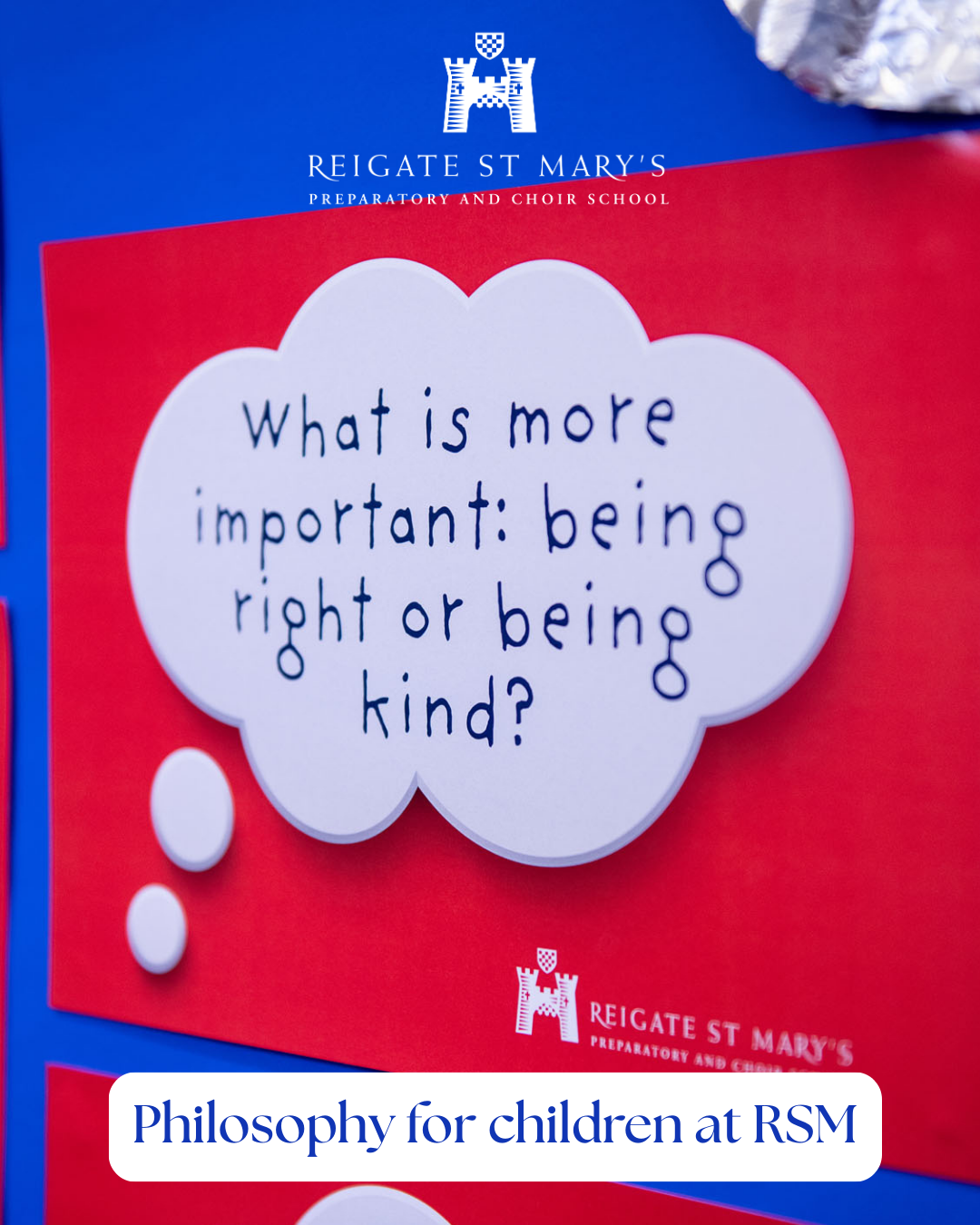
- What is more important: being right or being kind?
- Is it ever OK to break a rule?
- Can you be happy and sad at the same time?
- What does it mean to be brave?
These discussions help children to see that there is rarely a single “right” answer, and that thoughtful disagreement can deepen understanding rather than diminish it.
The impact of P4C on our pupils is significant. It supports the development of empathy, critical thinking and articulate communication, while nurturing emotional intelligence and self‑awareness. Children become more confident in sharing ideas, more respectful listeners and more reflective learners - skills that serve them well throughout their education and beyond.
We are immensely proud of our Philosophy for Children provision at Reigate St Mary’s. It reflects our wider commitment to nurturing thoughtful, compassionate and intellectually curious young people - children who are well prepared not only for academic success, but for life in an ever‑changing world.